SSI 2026 Guide: How to Pass the Strict $2,000 Asset Test
Supplemental Security Income (SSI) is a federal benefit program administered by the Social Security Administration (SSA). It provides monthly financial assistance to eligible people with limited income and resources who are age 65 or older, blind, or have a qualifying disability. Understanding the income rules, resource limits, and application process can help you determine whether you may qualify and maximize the benefits available under current federal regulations.
What Is Supplemental Security Income (SSI)?
Supplemental Security Income (SSI) is a needs-based federal program that pays monthly benefits to eligible older adults, blind individuals, and people with disabilities who have limited income and financial resources. Unlike Social Security retirement benefits, SSI is not based on your work history.
How SSI Differs From Social Security Retirement Benefits
- SSI is based on financial need rather than payroll taxes.
- No minimum work history is required.
- Benefits are funded through general federal revenues.
- Many recipients also qualify for Medicaid depending on state rules.
"Supplemental Security Income (SSI) pays monthly benefits to adults and children with a disability or blindness who have income and resources below specific financial limits. SSI also pays benefits to people age 65 and older without disabilities who meet the financial qualifications."
Who Qualifies for Supplemental Security Income?
You may qualify for SSI if you meet all applicable federal eligibility requirements.
Basic Eligibility Requirements
- Age 65 or older, or
- Blind under SSA rules, or
- Have a qualifying disability expected to last at least 12 months or result in death.
- Have limited income.
- Have limited financial resources.
- Meet citizenship or qualifying non-citizen requirements.
- Reside in the United States or certain eligible territories.
Income Rules
The SSA considers both earned and unearned income when determining SSI eligibility. However, not all income counts toward the benefit calculation because several exclusions apply.
If your income changes during the year, your monthly SSI payment may increase or decrease depending on SSA rules.
Resource Limits
Resources generally include cash, bank accounts, investments, and certain property.
| Category | Federal Rule |
|---|---|
| Individual resource limit | $2,000 |
| Couple resource limit | $3,000 |
| Primary residence | Generally excluded |
| One vehicle | May be excluded if used for transportation |
Source: Social Security Administration
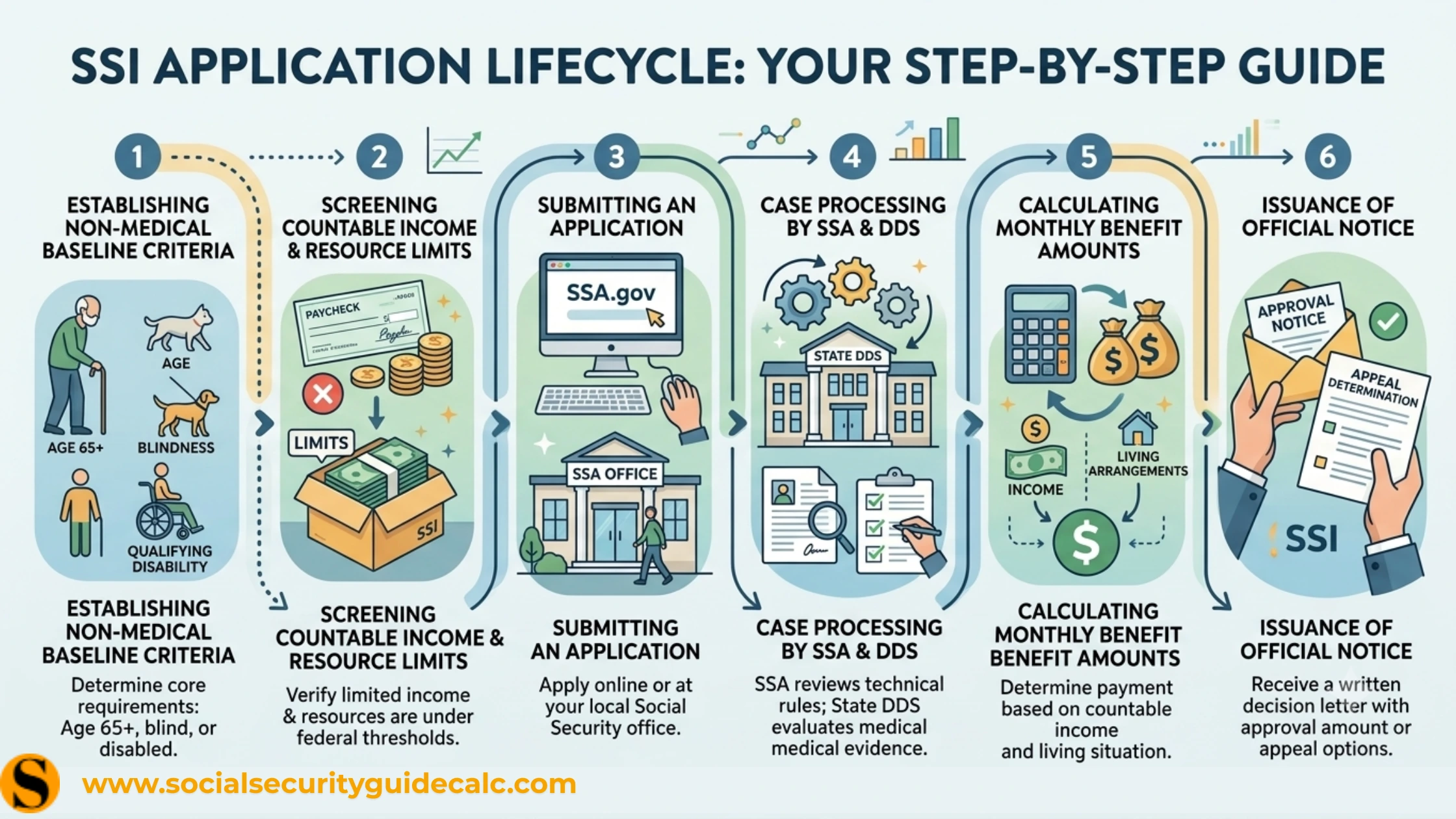
Infographic illustrating the SSI eligibility process
How Much Does SSI Pay?
The federal benefit rate is updated annually based on the Cost-of-Living Adjustment (COLA). Actual payments may differ depending on your income, living arrangements, and state supplemental payments.
| Benefit Type | 2026 Amount | Notes |
|---|---|---|
| Individual Federal Benefit Rate | Determined annually by SSA | Based on current SSA COLA updates |
| Eligible Couple | Determined annually by SSA | Subject to federal benefit rules |
Source: Social Security Administration
Because individual situations vary, using a Benefits Estimator can provide a more personalized estimate based on your financial circumstances.
How Income Affects SSI Benefits
SSI payments are reduced when countable income exceeds certain exclusions established by federal law.
- Earned wages may reduce benefits gradually.
- Social Security retirement benefits may reduce SSI.
- Pensions and unemployment compensation generally count as income.
- Some assistance programs and exclusions may not count.
If you receive both Social Security and SSI, understanding the interaction between programs is important. An Earnings Test Calculator can help evaluate how work income may affect your overall benefits.
How to Apply for Supplemental Security Income
- Gather identification and financial documents.
- Collect medical evidence if applying based on disability.
- Contact the Social Security Administration or begin the application process online when available.
- Complete the required interview.
- Respond promptly to any SSA requests for additional documentation.
Can You Receive SSI and Social Security Together?
Yes. Some individuals qualify for both programs. This is commonly known as receiving concurrent benefits. Your Social Security benefit amount is considered when calculating SSI eligibility, and your total SSI payment may be reduced accordingly.
Important Things to Report to SSA
- Changes in employment.
- Marriage or divorce.
- Moving to a new address.
- Changes in living arrangements.
- Receiving inheritances or gifts.
- Changes in bank account balances.
Frequently Asked Questions
Is Supplemental Security Income the same as Social Security?
No. SSI is a needs-based federal assistance program, while Social Security retirement and disability benefits are generally based on an individual's work and payroll tax contributions.
Can I work while receiving SSI?
Yes. Many recipients can work while receiving SSI, but earnings may reduce monthly payments depending on SSA income-counting rules and available work incentives.
Do SSI recipients automatically receive Medicare?
No. SSI eligibility does not automatically qualify someone for Medicare. Many recipients qualify for Medicaid, although eligibility rules may vary by state.
Will SSI payment amounts increase every year?
Federal benefit rates may change annually because of the Cost-of-Living Adjustment (COLA). Future increases are based on current SSA calculations and should not be treated as guaranteed projections.
Key Takeaways
- SSI provides monthly financial assistance to eligible individuals with limited income and resources.
- Work history is not required to qualify.
- Income and resources are reviewed regularly.
- Annual payment rates may change following SSA COLA announcements.
- Reporting changes promptly helps avoid overpayments.
For the latest eligibility requirements, payment rates, and policy updates, always consult official guidance from the Social Security Administration.